The resource type manages tasks by describing resource states and processing them in a state-machine-like manner to reach the target state. Its core concept is resource state assurance: regardless of the current state, the system guarantees that after the current resource description is submitted, the result will be consistent with what was submitted.
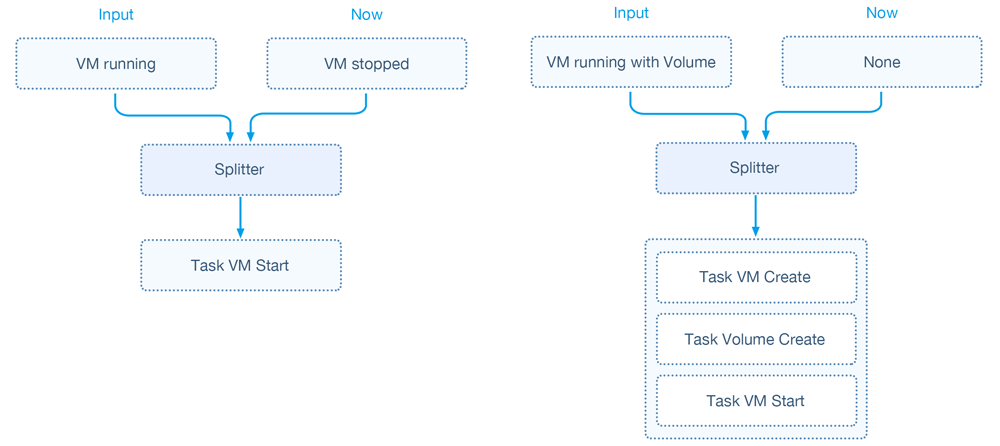
Advantages:
One-time tasks are typically used for tasks that are time-consuming yet well-defined and straightforward, such as attaching a disk or removing a host.
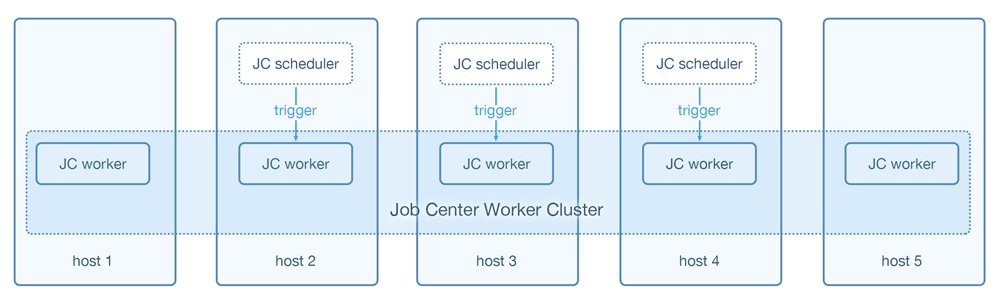
Scheduled tasks are triggered periodically by Job Center Scheduler, and are used to handle tasks that need to run in a continuous loop, such as alert checks and the virtual machine HA function.
The overall scheduled task process has two main parts:
Job Center Scheduler periodic trigger
Scheduled tasks are triggered by Job Center Scheduler, which is deployed only on a fixed set of three or five nodes. As long as one node's service is healthy, scheduled tasks will execute normally. Multi-node deployment provides more robust disaster recovery.
Execution of well-defined tasks
Unlike resource-type tasks, scheduled tasks have no state-machine-like setup. Therefore, when a scheduled task is submitted, the task to be executed and the required details must be specified upfront.
