For users of ACOS HCI (AVE) clusters or ACOS Compute clusters, when using load balancing, you can choose to deploy an external hardware load balancing server or a software load balancer. However, using an external load balancer introduces high operational costs and inconvenient maintenance. Therefore, using the integrated ANS load balancing in ACOS HCI (AVE) clusters or ACOS Compute clusters is the preferred choice.
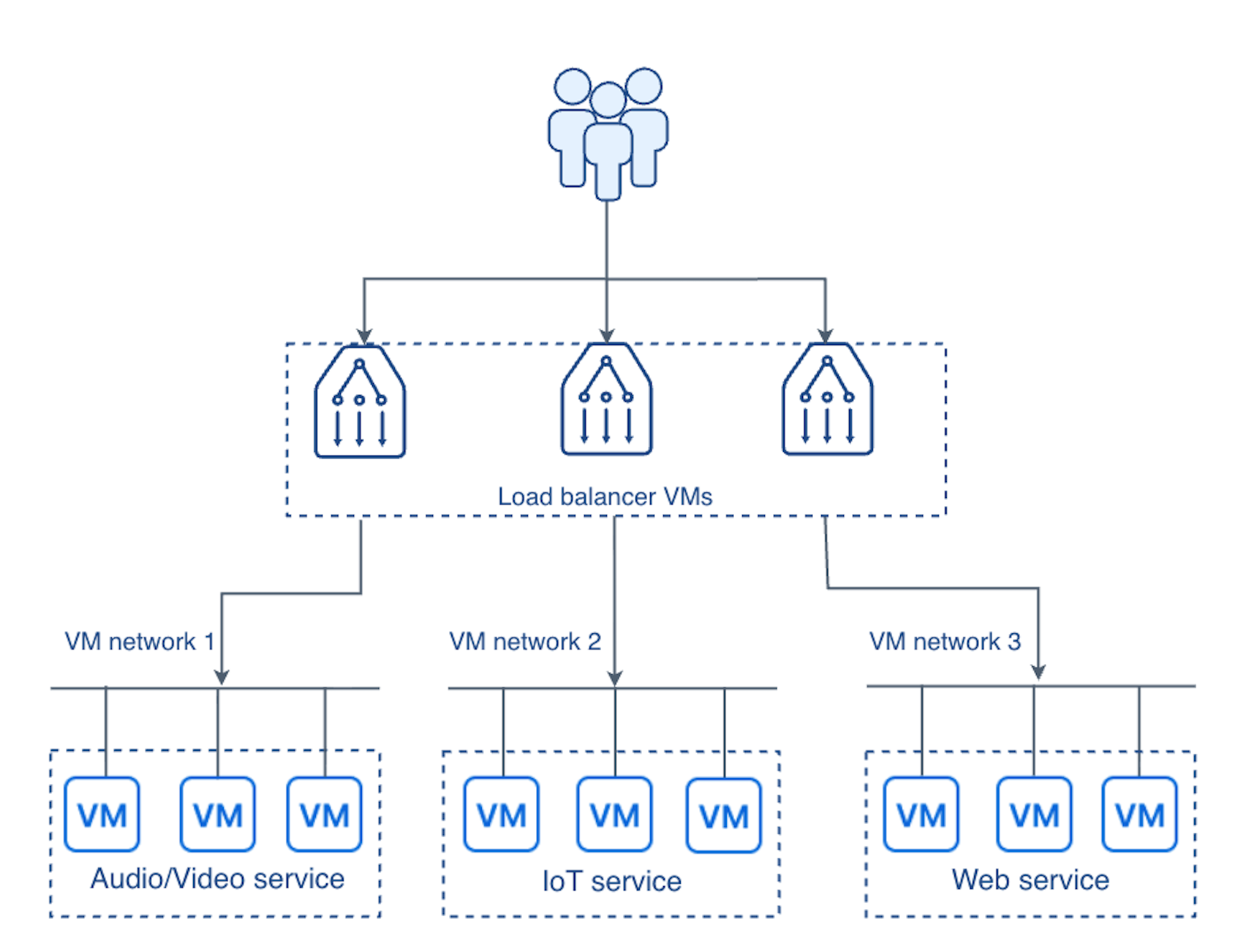
In a virtualization platform, various workload scenarios may exist, such as audio/video applications, web applications, and IoT applications. Each workload may be deployed in the same or different VM networks, and different application types have specific traffic behaviors, which poses significant challenges to the performance, elasticity, stability, and availability of the overall system. In this case, load balancing can be used to distribute workload traffic, and backend servers can be elastically scaled to support workload changes.
As virtualization technology matures, container technology has become a transformative force with far-reaching impact on the cloud computing field, and an increasing number of users are choosing to deploy applications in containerized environments.
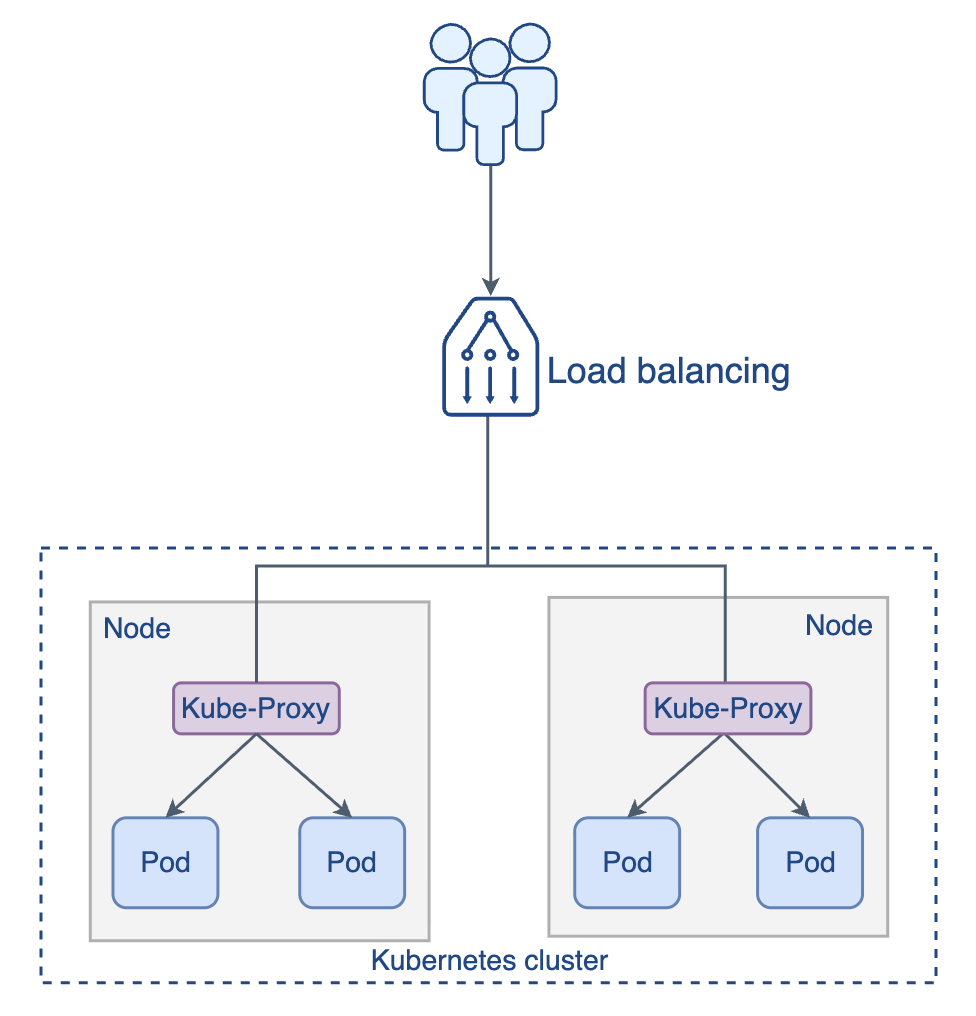
When using load balancing in a containerized environment, the primary options are open-source native LB solutions such as MetalLB. However, open-source native LB solutions offer limited functionality and lack enterprise-level service support, making it difficult to locate and debug issues when they arise.
ANS supports load balancing in containerized environments. Whether in a user-built Kubernetes environment or a Kubernetes environment managed by AKE (Arcfra Kubernetes Engine), you can flexibly and conveniently use load balancing to provide external-facing load balancing capabilities for applications within the cluster.
Information:
In the containerized scenario, new features such as cluster disaster recovery mode, VPC network scenarios, and server pool groups are not supported.
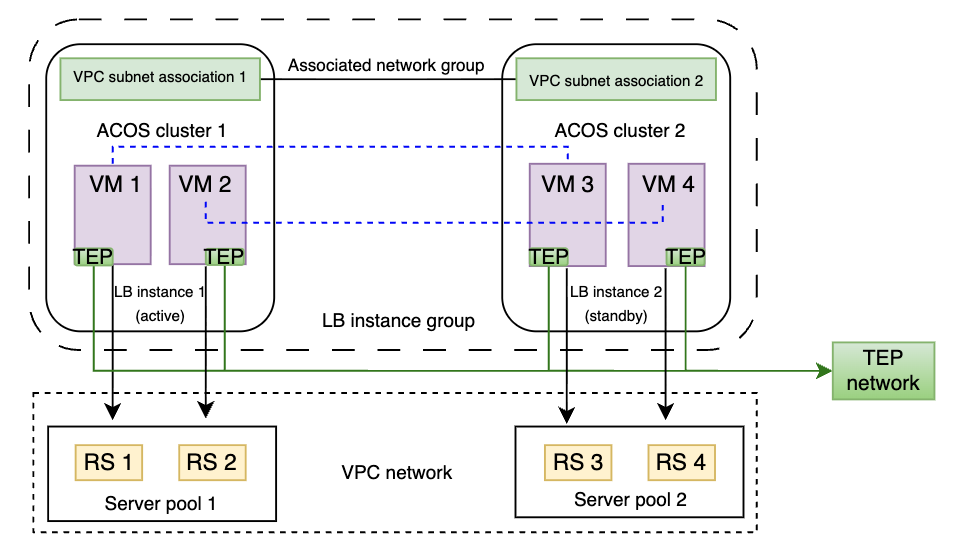
As workloads grow, higher requirements are placed on load balancing high availability. The ACOS cluster-level load balancing disaster recovery capability ensures that when a cluster-level failure occurs, traffic is quickly switched to the standby cluster, ensuring workload continuity and high availability.
The following figure illustrates the load balancing disaster recovery capability across ACOS clusters in a VPC network. When LB instance 1 fails, all virtual services on LB instance 1 are automatically migrated to LB instance 2 to continue providing services. In addition, you can choose whether to switch the active server pool associated with the migrated virtual services from server pool 1 to server pool 2.