The data plane is the core component that processes requests and forwards them, and exists as load balancer virtual machine instances. It receives configuration from the control plane and processes it according to specific rules. It can handle requests from multiple clients simultaneously and forward these requests to backend servers.
In L4 scenarios, LVS handles network-layer traffic forwarding, and Keepalived handles health checks between load balancer virtual machines and VIP failover. In L7 load balancing scenarios, the data plane uses Envoy to handle application-layer protocol parsing, route matching, and backend service pool forwarding.
As shown below, Envoy receives configurations from the control plane through xDS and uses Bootstrap, ListenerManager, and ClusterManager to manage its startup configuration, traffic entry points, and backend service resources.
Bootstrap provides the basic static configurations required for Envoy startup, such as node information, the Admin interface, xDS addresses, and initial resources. ListenerManager manages client access entry points, including VIPs, ports, HTTP/HTTPS protocols, TLS certificates, and the Listener lifecycle. ClusterManager manages backend service pools, including backend servers, health checks, load balancing policies, and backend TLS connections. The Admin Interface provides interfaces for querying Envoy's runtime status, configuration, metrics, and health, and supports adjustment of a small number of runtime parameters.
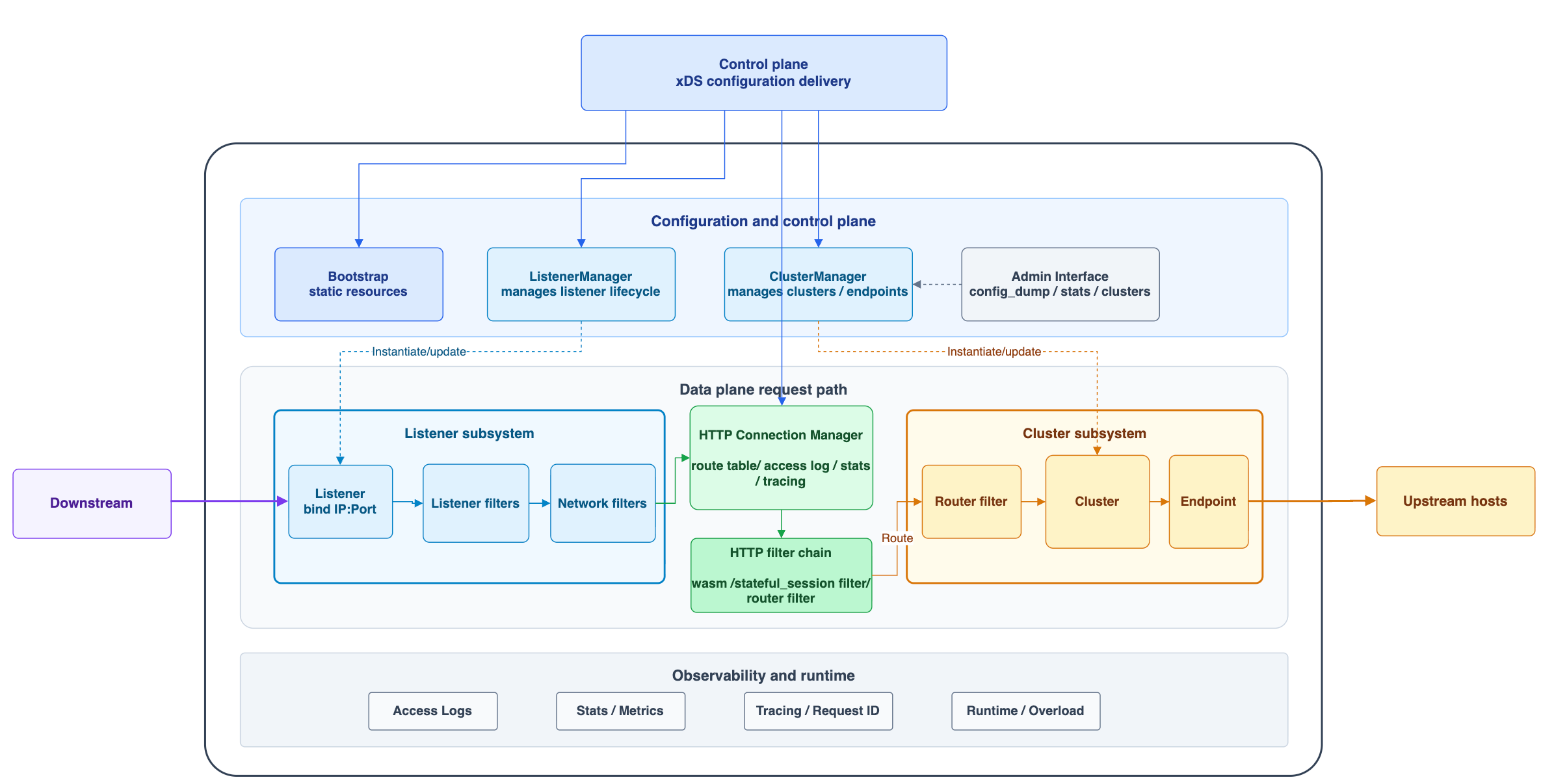
After Layer 7 traffic enters the data plane, downstream traffic first enters the Listener Subsystem and then passes through Listeners, listener filters, and Network filters to reach the HTTP Connection Manager.
The HTTP Connection Manager handles HTTP protocol processing, route tables, access logs, statistics, and tracing, and executes the HTTP filter chain.
The Router filter selects the target Cluster based on the route and ultimately selects a specific Endpoint to forward the request to a backend server.
Access Logs, Stats/Metrics, Tracing, and Runtime/Overload at the bottom represent Envoy's observability and runtime control capabilities during request processing.
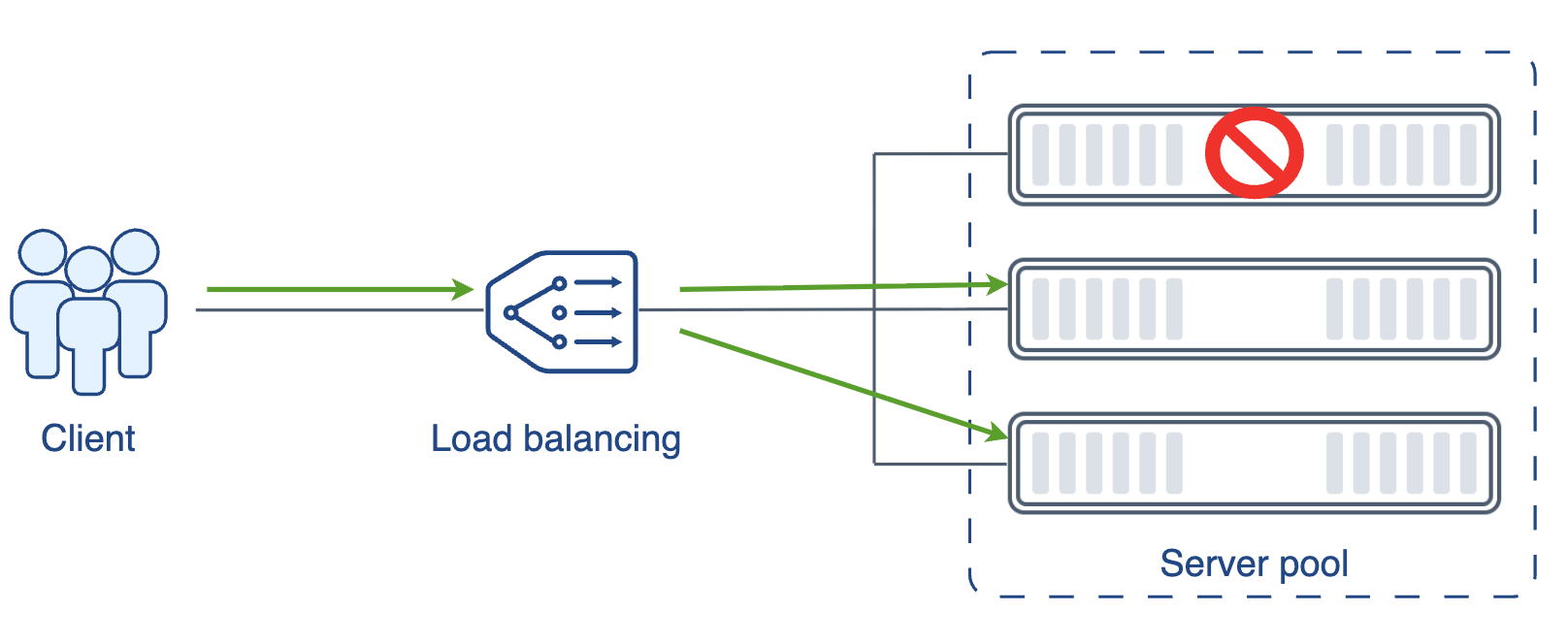
Application high availability: Under normal conditions, all backend servers in a server pool participate in handling client requests. When a backend server in the server pool fails, client requests are no longer forwarded to that server; other healthy backend servers continue to handle requests. Even when server failures occur, applications continue to provide services normally.
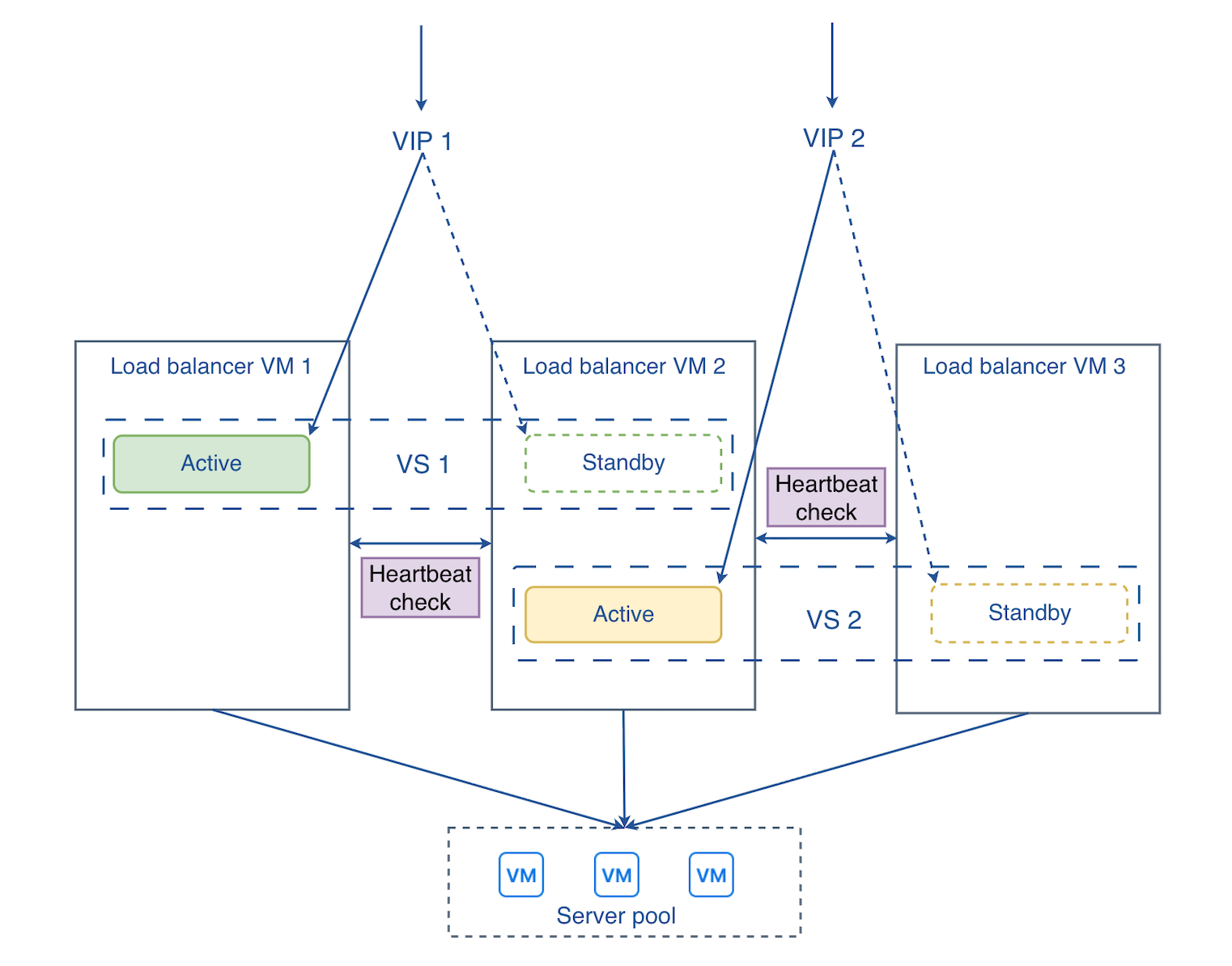
Virtual service high availability: Keepalived mode is used to implement highly available load balancing, preventing service unavailability caused by a single point of failure in a load balancer virtual machine and ensuring application stability and availability. Currently, you can configure two, three, or four load balancer virtual machines.
Each virtual service corresponds to one LB instance. Each instance consists of an active and a standby role, serving as the primary and secondary virtual services, respectively. At any given time, only the load balancer virtual machine hosting the primary virtual service receives client requests.
The heartbeat detection mechanism periodically sends heartbeat signals to confirm whether a load balancer virtual machine is operating normally. When the load balancer virtual machine hosting the primary virtual service fails, the virtual IP (VIP) automatically migrates to the load balancer virtual machine hosting the secondary virtual service, ensuring that the virtual service remains available.
The figure shows an example of high availability when three load balancer virtual machines are deployed. This mode effectively resolves the single point of failure issue for load balancer virtual machines. Load balancer virtual machines can also use the high availability mechanism for rolling upgrades. When a load balancer virtual machine is being upgraded, the VIP can be migrated to a normally operating virtual machine to ensure the virtual service is not affected by the upgrade, improving virtual service availability.
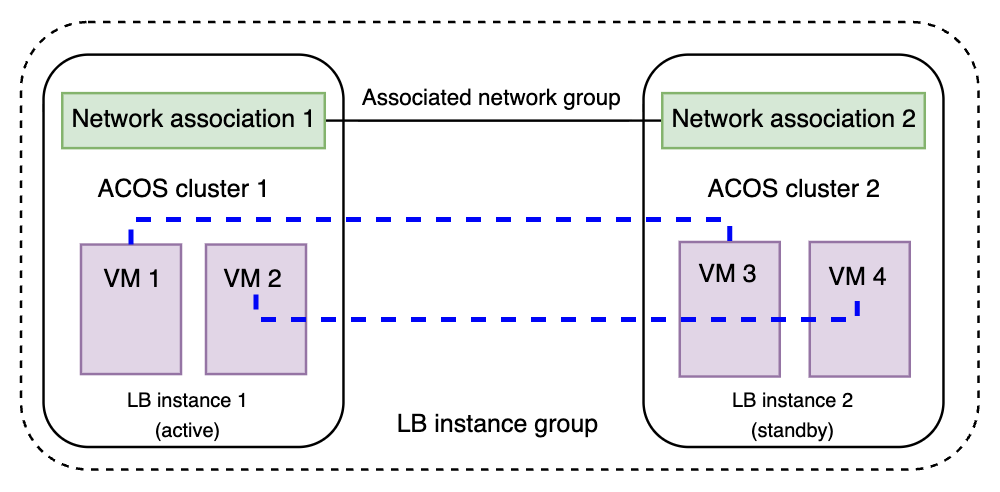
Cluster high availability: Supports cluster disaster recovery in primary-secondary mode. Within the two LB instances in an LB instance group, only one virtual machine in one instance has active virtual services at any given time. The control plane detects the health status of all LB instances to determine whether to trigger a disaster recovery failover. Once triggered, the VIP automatically migrates to a healthy LB instance to ensure workloads continue to operate normally.
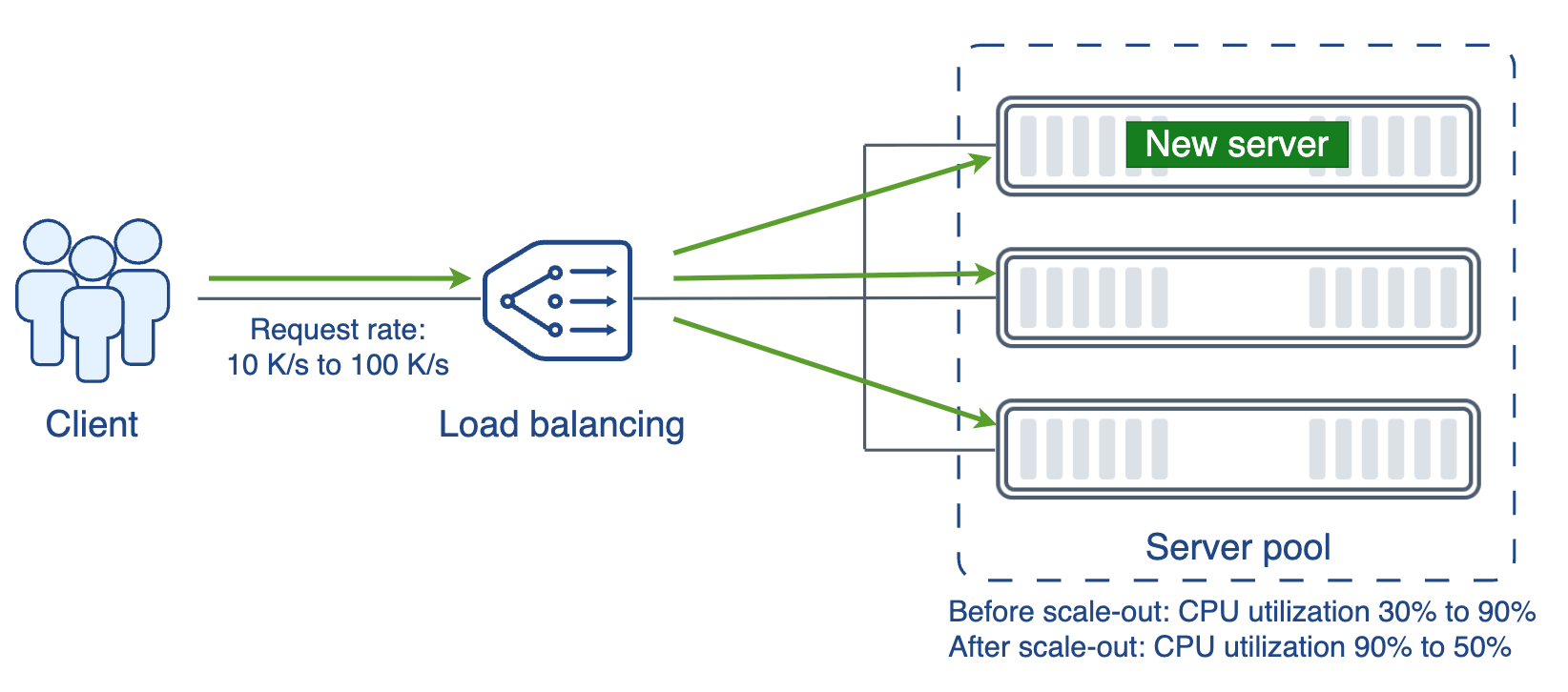
The concurrent processing capacity of servers can be increased by adding more backend servers to handle growing volumes of concurrent client requests.
As shown in the figure, when the client request volume is 10 K/s, only two servers in the server pool are sufficient to meet clients' concurrent access needs, with a CPU utilization of 30%. When the client request volume grows to 100 K/s, the CPU utilization of the two servers spikes from 30% to 90%, and backend server resources are severely exhausted.
At this point, the load on existing servers can be reduced by adding new backend servers to better handle concurrent client requests. After adding one backend server, CPU utilization drops from 90% to 50%.
This horizontal scale-out capability for handling high concurrency greatly reduces the risk of system crashes caused by sudden traffic spikes.